Automated Testing from Your Perspective
Depending on the perspective from which you look at your test solutions, different questions come to the foreground. These pages provide technical approaches, guidance, and practical options relating to test software, modernization, and the use of the Tecap Automated Test Platform.
Production Process & Operation
Technical Responsibility & Test Strategy
Test Development & Engineering


Which topics require the most attention during ongoing test operation?
Which questions arise when individual test solutions grow into an entire test environment?
Which requirements make test development particularly demanding today?
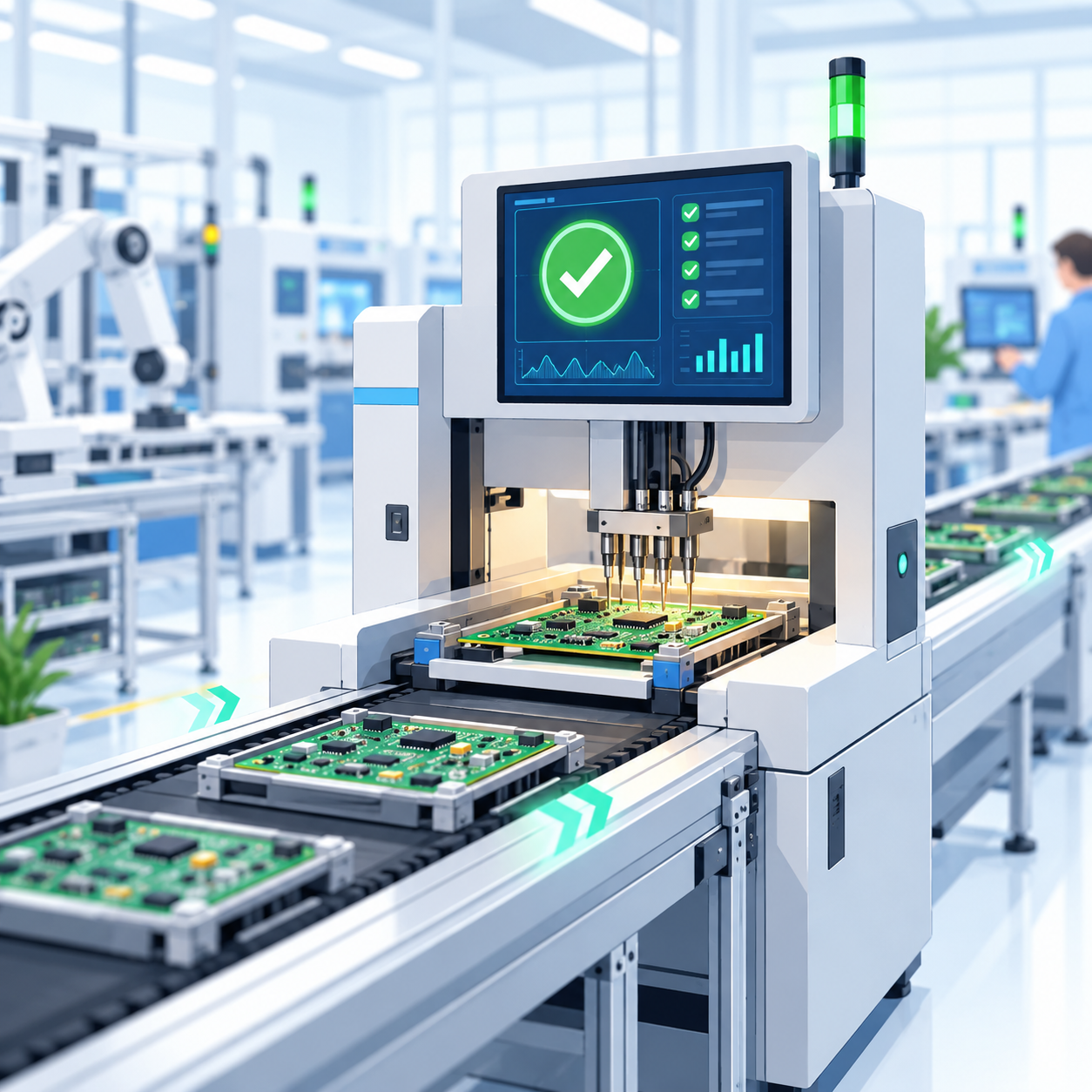
In production, it quickly becomes apparent how well test software, test systems, and operational processes work together. Process errors, unnecessary waiting times, declining yield, or wear that is not detected in time have a direct impact here.
Tecap provides functions for stable production releases, traceability, quality monitoring, maintenance and calibration, contacting-unit monitoring, and the integration of test stations into existing production and IT environments.
Typical questions may include:
- Where do recurring errors or unnecessary steps occur in the test process?
- How can yield, test results, and quality trends be monitored more effectively during production?
- How can maintenance, calibration, and wear of production equipment be organized in a traceable way?
- How can the condition of contacting units be monitored?
- How can released test versions be transferred into production in a controlled manner?
- How can results, serial numbers, and production data be combined reliably?
- How can test stations interact with MES, ERP, or other production systems?
- How can multiple stations and their data be managed together?
As the number of products, projects, and test systems grows, individual solutions increasingly become part of a larger test environment. In-house libraries, different software versions, project-specific extensions, and historically evolved approaches can create considerable maintenance and coordination effort.
Here you will find guidance on standardization, make-or-buy decisions, modernization, migration, and the question of which common technical foundation may be suitable for both existing and future test solutions.
Questions may include:
- Which parts of in-house test software should continue to be developed and maintained internally?
- Where does it make sense to use existing platform functions?
- Which structures can be standardized across multiple projects and test systems?
- Where do different solutions create duplicate development or maintenance effort?
- Which individual solutions should be retained?
- How can stable processes be achieved across different test systems?
- How can mature software structures be developed further step by step?
- When does a common test platform offer an advantage over continued in-house development?
In engineering, new requirements directly encounter the existing software structure. New variants are added, measurement instruments need to be integrated, special cases need to be handled, and additional functions need to be developed. At the same time, test programs, development environments, and often production systems also need to be maintained.
Tecap provides a common structure for test plans, variants, measurement instruments, system configuration, and test programs, while also offering extension options for requirements that go beyond the existing functionality.
Relevant questions may include:
- Which functions should the test software already provide?
- How can test programs and variants be structured clearly?
- How can new measurement instruments be integrated without having to handle their technical specifics again in every test program?
- How can special cases be implemented without making the overall software structure increasingly complex?
- When is a custom extension worthwhile, and when is an existing platform function the better choice?
- How can ICT, FCT, and other test methods be combined within a common environment?
- How much effort is required to maintain and further develop the in-house software environment?
- How can support for production systems be simplified from within engineering?
- How can a test solution remain extensible over the long term as new requirements emerge?
Which Topics Shape Your Testing Environment?
Test solutions evolve over many years. New products, variants, requirements, and technologies are added, while existing systems, test programs, and processes continue to be used.
This creates very different starting points. Proven structures encounter new requirements, individual areas become more demanding, and technical foundations need to keep pace with further development.
Typical Starting Points
- Growing Complexity in the Testing Process
Products, variants, stations, and requirements continue to increase – along with the effort required to keep everything properly coordinated.
- Extensibility of Existing Solutions
The existing solution fulfills its purpose, but new requirements can lead to increasing adaptation effort.
- Mature Software and Project Structures
Over the years, individual solutions, special cases, and project-specific extensions accumulate. As a result, changes can affect an increasing number of areas.
- New Requirements Within Existing Processes
New products, data flows, MES/ERP integrations, quality requirements, or technologies encounter existing structures and established production processes.
- Continued Use of Existing Technology
Hardware, test programs, processes, and existing expertise often continue to provide significant value, while individual areas may need further technical or structural development.
- Different Paths for Further Development
Targeted improvements, standardization, migration, or a new implementation: depending on the starting point, different approaches may be appropriate.
Situations like these can rarely be assessed on the basis of individual functions alone. What matters is the interaction between software, hardware, test programs, production processes, and future requirements.
We address typical questions from engineering and production and examine different approaches, including their possibilities, limitations, and implications.
The following topics can help you assess different approaches for your own testing environment.
Topics for Further Consideration
- Where does standardization provide value, and where does individual customization remain useful?
- How can existing test solutions be modernized step by step?
- Which parts of existing software, hardware, and test programs can continue to be used?
- How can new technologies be integrated into existing production solutions?
- How can test programs, variants, system configuration, and data remain manageable over the long term?
- How can engineering and production be connected more effectively?
- When does a common test platform provide advantages?
- Which criteria should be considered when selecting a test platform?

Tecap Automated Test Platform supports the development, operation, and analysis of automated test systems.
Download the latest version here.